

Newsroom
GGM Welcomes Kelsey Knish
 German, Gallagher & Murtagh is pleased to welcome Kelsey Knish to the firm as an Associate. Kelsey focuses her practice on workers’ compensation defense, representing employers, insurance carriers, and third-party administrators throughout Pennsylvania and New Jersey. She works with clients through all stages of the claims process, from investigation through resolution.
GGM Welcomes Feranmi Olugbenga-Jebutu
 German, Gallagher & Murtagh is pleased to welcome Feranmi Olugbenga-Jebutu to the firm as an Associate. Feranmi’s practice includes casualty litigation, trucking and transportation, gig economy, medical malpractice, and premises liability matters. She is admitted to practice in Pennsylvania and is pending admission in New Jersey and New York.
Jeff Laudenbach to Present at 2026 ALFA International Workers’ Compensation Seminar
German Gallagher & Murtagh is pleased to share that Jeff Laudenbach will be speaking on a panel presentation entitled “Riding the Multi State Range: Navigating WC Claims Across Jurisdictions in the Wild West and Beyond” at the 2026 ALFA International Workers Compensation Practice Group Seminar in Colorado Springs, CO.
This panel will discuss the unique challenges of multi-jurisdiction workers’ compensation claims and exposures. This session will explore how employers can effectively manage claims that cross state lines with conflicting benefit structures, jurisdictional disputes to complex coverage issues and aggressive claimant strategies in today’s mobile workforce.

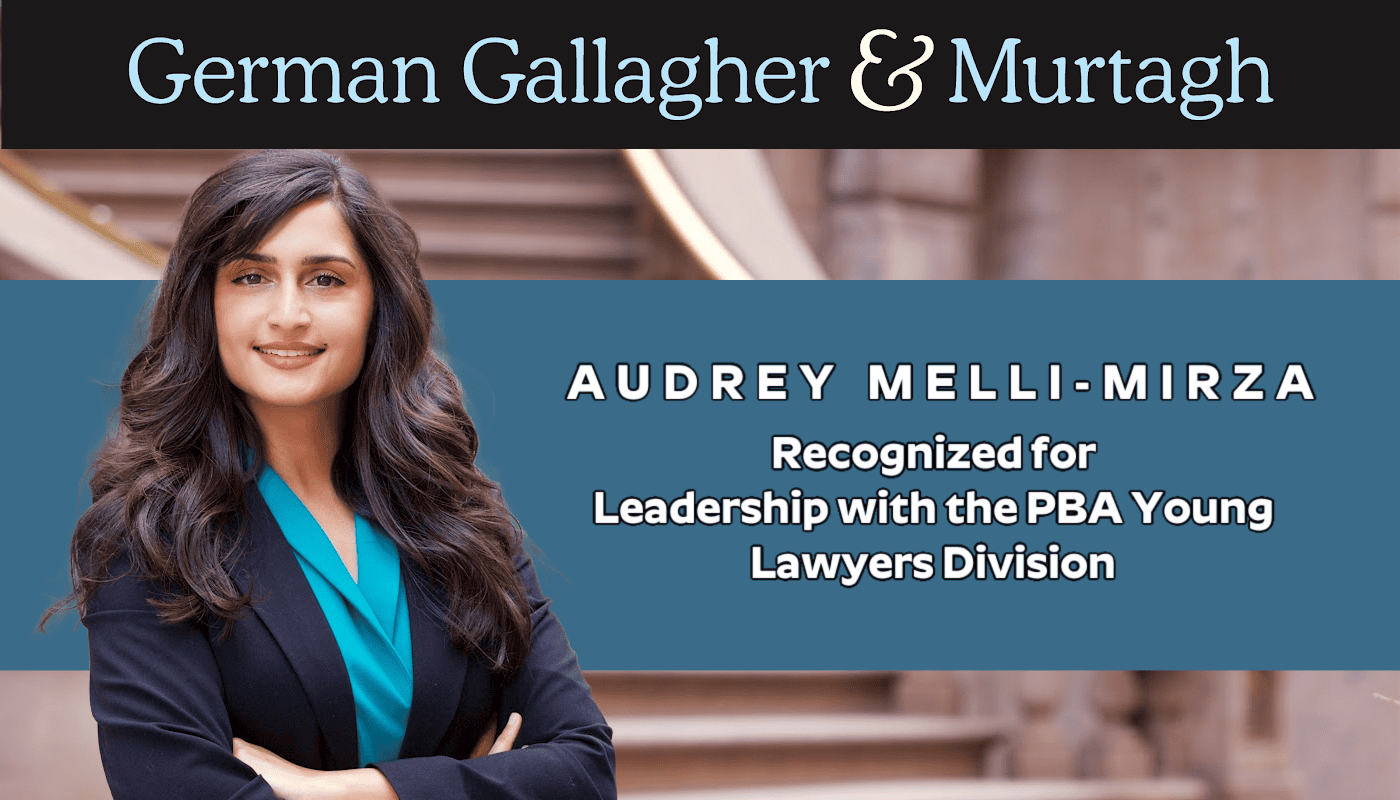
Audrey Melli-Mirza Recognized for Leadership with the PBA Young Lawyers Division
German, Gallagher & Murtagh is proud to spotlight Audrey Melli-Mirza’s continued leadership within the Philadelphia Bar Association’s Young Lawyers Division (YLD), where she serves as Cabinet Treasurer and as the Cabinet contact for the YLD Diversity Committee.
This fall, the Diversity Committee will award six $1,000 scholarships to law students who have demonstrated a strong commitment to diversity, service, and the Philadelphia legal community, and, thanks in part to the committee’s advocacy, this year’s scholarship funding was increased.
Law students: we encourage you to apply! Applications are submitted through your affinity bar association, and the deadline is Friday, September 11 at 5 p.m. See the flyer below for more details on eligibility and how to apply.
Audrey’s involvement reflects German, Gallagher & Murtagh’s ongoing commitment to supporting the next generation of diverse legal talent in Philadelphia.
GGM Attorneys Recognized by The Best Lawyers in America for 2026
GGM is proud to announce that Yana N. Shapiro and Jacob C. Lehman have been selected to The Best Lawyers in America, and Cameron N. Campbell has been named to The Best Lawyers in America: Ones to Watch.
The Best Lawyers in America recognizes the top four percent of practicing attorneys in the nation and is based on confidential client and peer evaluations, as well as extensive editorial research. Since it was first published in 1983, Best Lawyers has become universally regarded as the definitive guide to legal excellence. For more information, please visit https://www.bestlawyers.com.

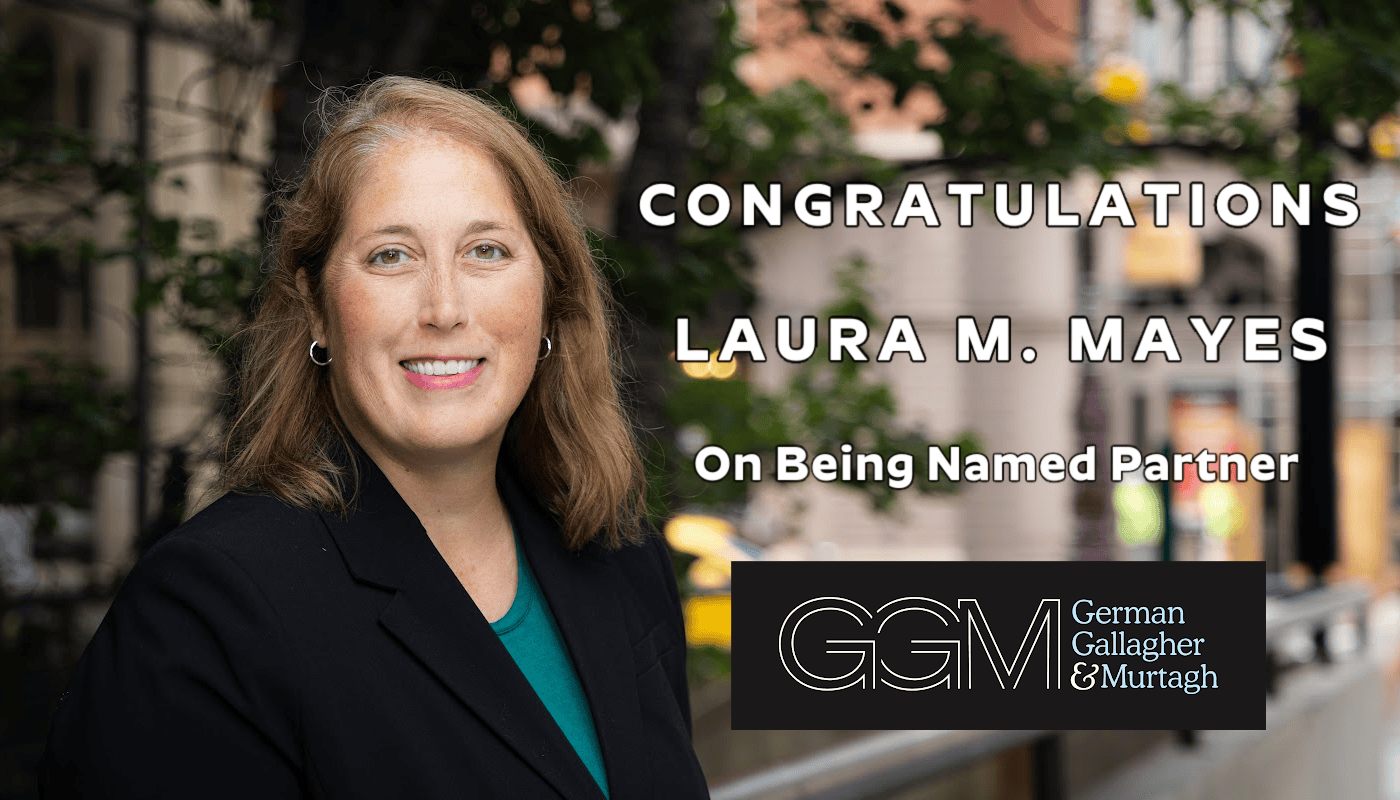
German, Gallagher & Murtagh Announces Laura M. Mayes as Partner
German, Gallagher & Murtagh is pleased to announce that Laura M. Mayes has been named a Partner of the firm. Laura’s promotion reflects her dedication to client service, legal excellence, and her significant contributions to the firm’s continued success.
Throughout her career with the firm, Laura has earned the trust and respect of clients and colleagues through her professionalism, strong advocacy, and commitment to achieving positive results.
Please join us in congratulating Laura on this well-deserved achievement and important milestone in her career.
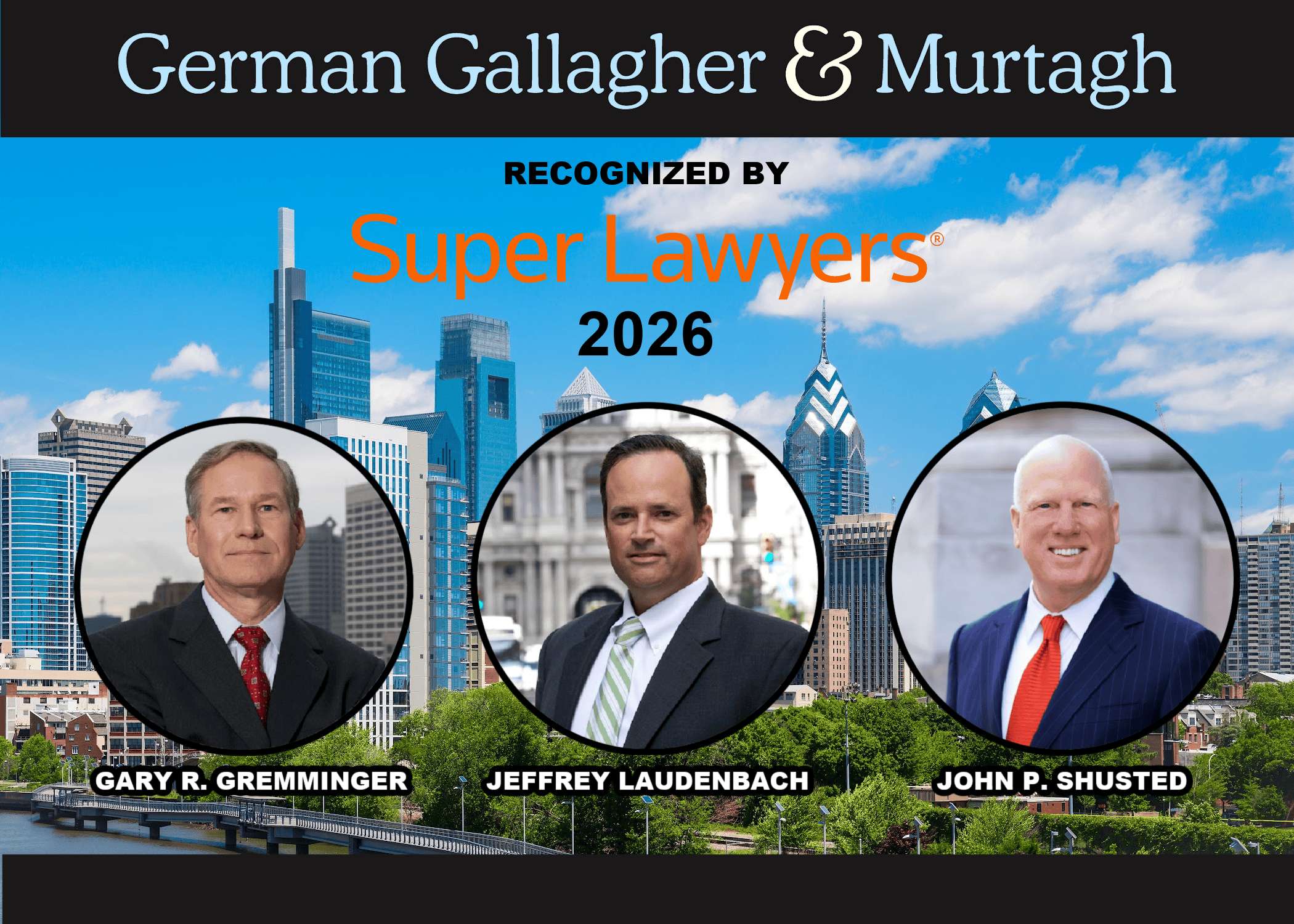
GGM Announces 2026 Super Lawyers
GGM is pleased to announce that Gary R. Gremminger, John P. Shusted, and Jeffrey D. Laudenbach have been named Pennsylvania Super Lawyers for 2026.
GGM Welcomes Nafissatou Dicko

German, Gallagher & Murtagh, P.C. is pleased to welcome Nafissatou (Nafi) Dicko as an associate in the firm’s Philadelphia office.
Nafi represents clients in casualty litigation, medical malpractice, and premises liability matters. She also brings experience in insurance defense and professional liability.
She earned her B.A. in Criminal Justice from the University of Delaware and her J.D. from Widener University Delaware Law School.
Nafi is admitted to practice in Pennsylvania and New Jersey, as well as the U.S. District Courts for the Eastern and Middle Districts of Pennsylvania.
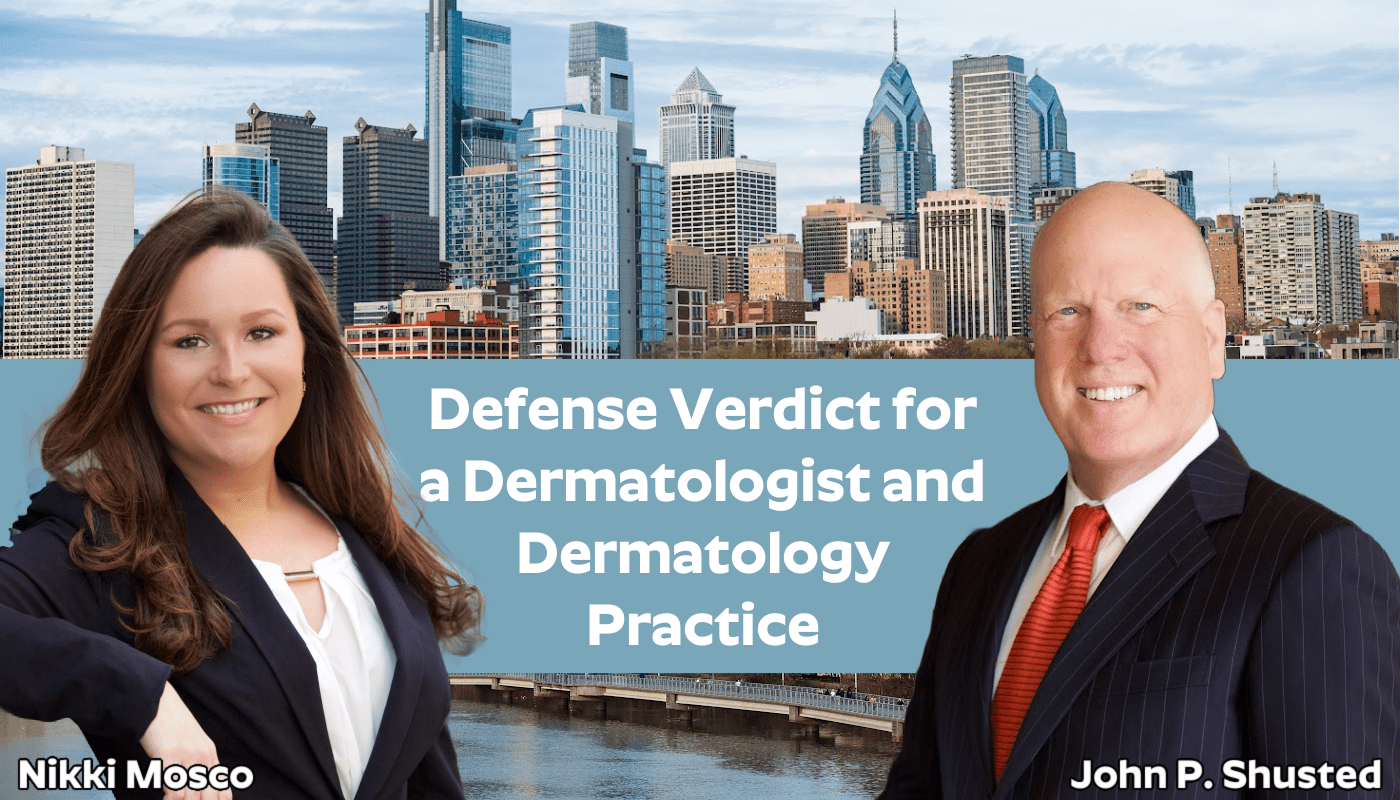
Attorneys Nikki Mosco and Jack Shusted Successfully Secure a Defense Verdict for a Dermatologist and Dermatology Practice
On Thursday, May 21, 2026, Nikki Mosco and Jack Shusted secured a defense verdict on behalf of their clients, a board-certified dermatologist and dermatology office, following a three-day jury trial in the Bucks County Court of Common Pleas. The Plaintiff alleged that the Defendant failed to be available over a two-day period to examine the Plaintiff following a surgical excision of an atypical Clark nevus on the Plaintiff’s left foot. Plaintiff further alleged that this alleged unavailability of Defendants increased the risk of harm she sustained from the development of life-threatening Group A streptococcus sepsis and necrotizing fasciitis of her left foot.
The defense successfully demonstrated that Defendants were available to and spoke with Plaintiff multiple times on both days and requested that she come to the office to be examined. Further, the defense established that the patient initially experienced normal postoperative findings and then later became hyperacutely ill on the third day developing necrotizing fasciitis group A strep.
The jury returned a verdict in favor of the defense, finding that there was no deviation from the standard of care.
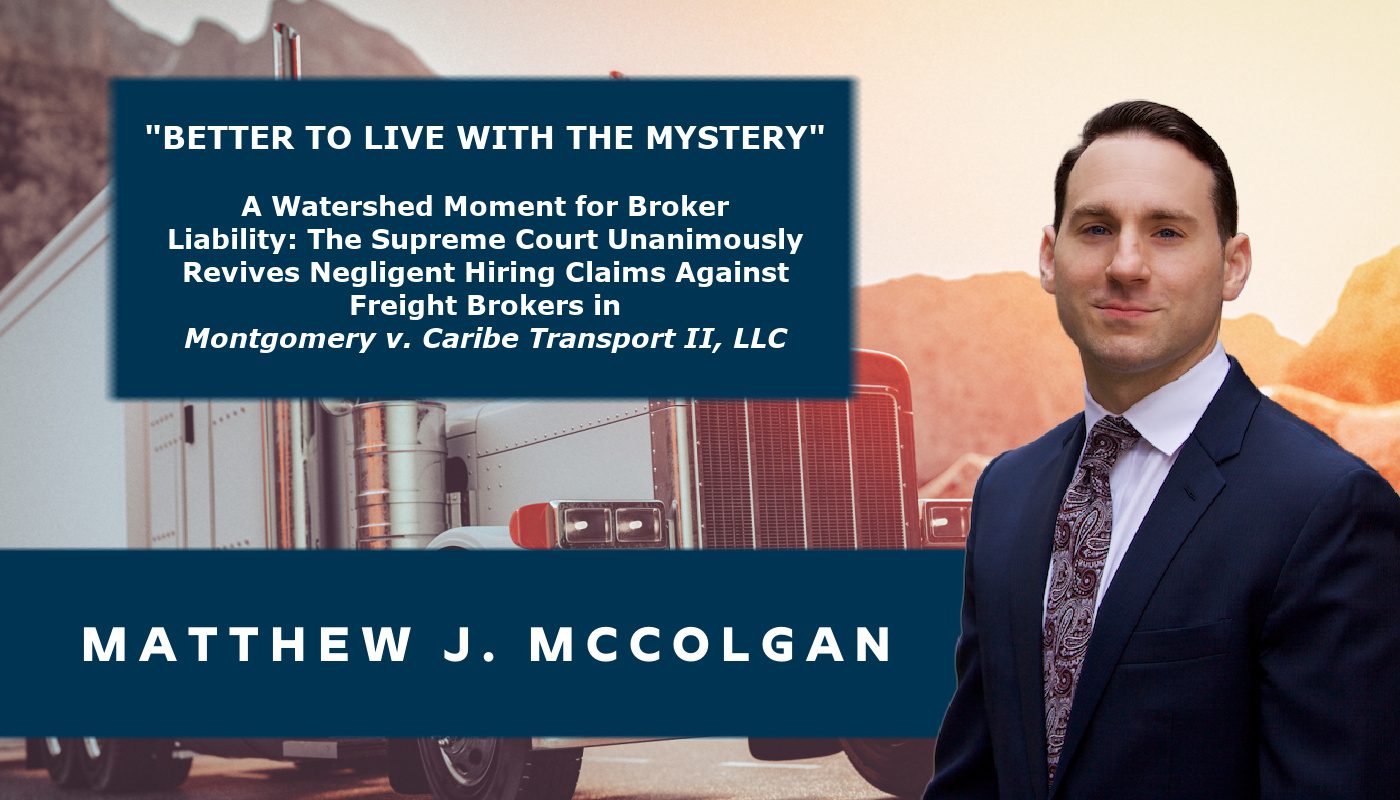
By Matthew McColgan, a Look at the United States Supreme Court’s Recent Unanimous Decision Impacting Freight Brokers Nationwide in Montgomery v. Caribe Transport II, LLC
“BETTER TO LIVE WITH THE MYSTERY”
A WATERSHED MOMENT FOR BROKER LIABILITY: THE SUPREME COURT UNANIMOUSLY REVIVES NEGLIGENT HIRING CLAIMS AGAINST FREIGHT BROKERS IN MONTGOMERY V. CARIBE TRANSPORT II, LLC
Matthew J. McColgan, Esquire
On May 14, 2026, the Supreme Court of the United States issued a unanimous and highly consequential decision in Montgomery v. Caribe Transport II, LLC, No. 24-1238, 2026 LX 272294 (May 14, 2026) holding that state law negligence claims against freight brokers are not preempted under the Federal Aviation Administration Authorization Act (“FAAAA”). The Court’s opinion, authored by Associate Justice Amy Coney Barrett, solidifies a deep circuit split and significantly reshapes the litigation landscape in trucking litigation.
Montgomery v. Caribe Transport II, LLC stems from a catastrophic trucking collision involving plaintiff Shawn Montgomery and a motor carrier hired by broker C.H. Robinson Worldwide, Inc. Mr. Montgomery alleged that the broker negligently selected Caribe Transport despite alleged safety deficiencies reflected in federal safety ratings, including concerns involving driver qualification, hours-of-service compliance, maintenance practices, and crash history.
Brokers have long maintained that negligent hiring claims necessarily impacted brokerage “services” and therefore fell within the FAAAA’s expansive preemption clause. Prior to Montgomery, federal courts were sharply divided. Some jurisdictions, particularly within the Seventh Circuit, held that negligent selection claims against brokers were expressly preempted because they directly targeted a broker’s “services.”[1] Other courts, most notably the Ninth Circuit, concluded that such claims fell within the FAAAA’s safety exception. With the backdrop of this Circuit Court disharmony, the central issue before the Montgomery Court was whether claims alleging negligent hiring by a freight broker of a motor carrier to transport goods falls within the FAAAA’s safety exception.
Focusing on 49 U.S.C. §14501(c)(2)(A)’s monikered “safety exception”, which states that §14501(c)(1)’s preemption provision “shall not restrict the safety regulatory authority of a State with respect to motor vehicles”, the Court found that the FAAAA does not “restrict the safety regulatory authority of a State with respect to motor vehicles.”[2] Because such negligence claims arise from the selection of motor carriers operating trucks on public highways, the Court concluded that these claims directly concern motor vehicle safety. Importantly, state common law tort duties fall within the purview of a state’s “safety regulatory authority,” and therefore requiring brokers to exercise reasonable care in selecting carriers is fundamentally tied to roadway safety.
This Opinion specifically does not decide whether 49 U. S. C. §14501(c)(1) would preempt Mr. Montgomery’s negligent-hiring claim. Rather, its holding confines itself to ruling that the safety exception of the FAAAA applies, noting that it was “not obvious why Congress included a safety exception in (c) but not in (b).”[3] The Court resolves this discrepancy by explaining that “it would be even odder to say that the alleged tort—the negligent hiring of an unsafe motor carrier whose truck caused injury—is not an exercise of ‘the safety regulatory authority of a State with respect to motor vehicles.’ §14501(c)(2)(A). The text of subsection (c)(2)(A) controls.”[4] Leaving it at: “Better to live with the mystery than to rewrite the statute.”[5]
A concurrence by Justice Kavanaugh, joined by Justice Alito, sheds light onto the Court’s approach, and discloses that the opinion was close. While the concurrence considers the resultant “mystery” between the Act’s disallowance of state tort suits against intrastate transportation and its allowance of the same against interstate transportation a “good point” argued by the brokers (“Why would Congress permit state tort suits against brokers for arranging interstate trips but preempt state tort suits against brokers for arranging intrastate trips? Plaintiff has no good answer to that question.”[6]), the concurrence points to a higher importance of the overall structure of safety regime, and characterizes the statutory and circuit dichotomy as the distinction between pursuing economic deregulation and preserving safety regulation.
Justices Kavanaugh and Alito acknowledge what the industry feared – increased insurance and litigation costs – noting that the Court’s decision “should not be read to mean that brokers will routinely be subject to state tort liability in the wake of truck accidents.”[7] However, the proximate cause requirement safeguard the Court references will likely be of little help to brokers obtaining favorable insurance premiums or avoiding being dragged into litigation.
This case drew extensive amicus participation from transportation industry organizations, defense groups, and policy advocates. Amici on behalf of freight brokers and industry stakeholders warned that permitting negligent hiring claims would expose brokers to inconsistent state tort standards, increase litigation costs, and disrupt the efficiency of interstate freight operations. Conversely, amici supporting the plaintiff emphasized that broker carrier-selection decisions have direct public safety consequences and argued that traditional state tort remedies serve as an essential accountability mechanism in the commercial transportation industry. The Court’s unanimous ruling ultimately signals that, at least in the context of public highway safety, traditional tort accountability remains fully compatible with the federal regulatory framework governing interstate transportation.
The broader transportation industry implications are substantial. By confirming that negligent hiring claims against freight brokers fall within the FAAAA’s safety exception to preemption, the Court has fundamentally altered litigation landscapes for injurious transportation cases nationwide. The ruling strengthens a plaintiff’s ability to pursue brokers directly, increases the importance of carrier selection processes, and seemingly reshapes how transportation safety procedures can become a central litigation issue. The decision may also accelerate a trend already emerging within the industry: the transition from purely transactional freight matching toward more comprehensive risk-management-based brokerage operations.
[1] Montgomery v. Caribe Transp. II LLC, No. 24-1238, 2026 U.S. LEXIS 2036, at *9 (May 14, 2026)(comparing Ye v. Global-Tranz Enterprises, Inc., 74 F. 4th 453, 456 (CA7 2023), and Aspen Am. Ins. Co. v. Landstar Ranger, 65 F. 4th 1261, 1264 (CA11 2023), with Cox v. Total Quality Logistics, Inc., 142 F. 4th 847, 853-858 (CA6 2025), and Miller v. C.H. Robinson Worldwide, Inc., 976 F. 3d 1016, 1020 (CA9 2020).
[2] Montgomery, No. 24-1238, 2026 U.S. LEXIS, at *10 – 12.
[3] Montgomery v. Caribe Transp. II LLC, No. 24-1238, 2026 U.S. LEXIS 2036, at *12. (May 14, 2026).
[4] Id. at *13-14.
[5] Id. at *12-13.
[6] Id. at *16.
[7] Id. at *19.